
Lowitja Institute Knowledge Translation Summit
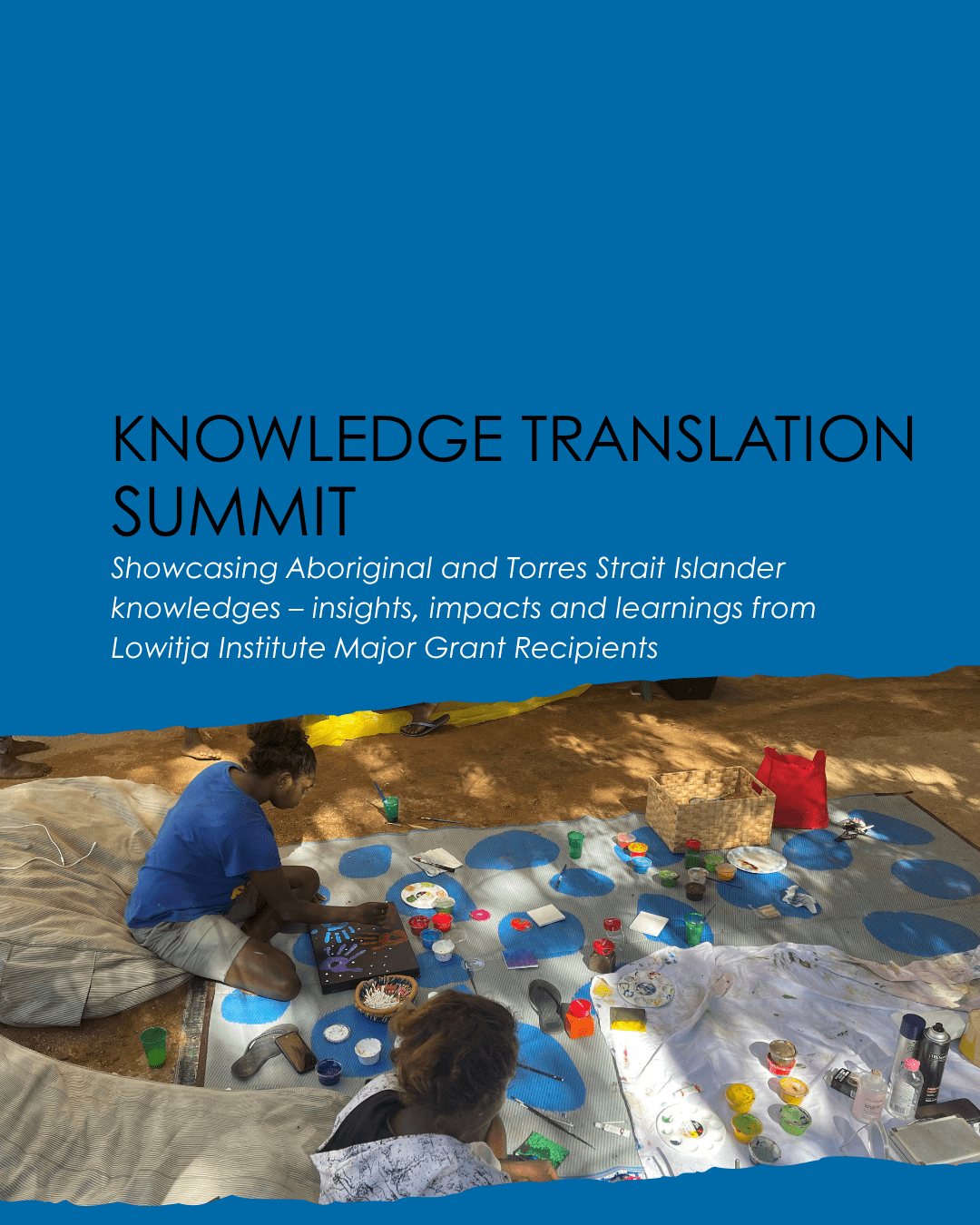
Our May 2026 online gathering brought together policymakers, Aboriginal and Torres Strait Islander peoples, communities, and researchers to share knowledge, showcase innovation, and influence systems change.
For generations, our communities have demonstrated that self-determined, strengths-based, and community-led models deliver the most effective and sustainable outcomes. When Indigenous peoples have authority over systems that shape access to resources and decision-making through self-determined governance structures, we are better positioned to design and deliver policies and programs that reflect our cultural values, community priorities, and definitions of wellbeing. In effect, nation building and self-determination are health interventions: they shift power, restore sovereignty, and create the political and structural conditions needed for Indigenous peoples to thrive.
This KT summit held space for some of these stories to be shared, led by Lowitja Institute Major Research Grant recipients. The impact of these projects demonstrates how direct funding, and the genuine sharing of resources and power with the community controlled sector, translates into meaningful and lasting change for communities and how self-determination is a driver for good health.
Presenting organisations:
- ATSICHS Brisbane (https://atsichsbrisbane.org.au/)
This project aimed to develop and implement a model that provides culturally appropriate and safe kin mapping and connection strategies for Aboriginal and Torres Strait Islander children in out-of-home care.
Ngaaminya Project: a First Nations-led project mapping Aboriginal and Torres Strait Islander community expectations of good eye health for children
Limited literature confirms lack of investigation into Aboriginal and Torres Strait Islander people’s expectations about consent, data use, and health service data-sharing practices, especially decolonised consent processes and practices embedded in Indigenous Data Sovereignty principles. This project seeks to address these challenges.
This study will measure the current burden of iron deficiency and iron deficiency anaemia in Maari Ma’s under-five-years Aboriginal population in Broken Hill and Wilcannia, identifying key risk factors associated with iron deficiency.
The idea behind the Bigiswun Kid Project, following up the participants from the Lililwan Project, came from local Aboriginal women who worked on the original study and were concerned that some of the Lililwan cohort were struggling in adolescence.
This project aims to decolonise and strengthen the maternity care workforce by improving the choices and pathways for Aboriginal women into tertiary education necessary for employment in maternity services such as Birthing on Country models of care.
